
Scratches and die marks on press brake bends are caused by sliding friction between the metal sheet and the die under high clamping force — and they are preventable. The most reliable fixes are mark-free tooling that rolls with the material, protective film on the blank, and correct V-opening and radius matching. This guide explains why marks appear, gives five proven prevention methods, and compares real mark-free tooling options you can buy today.
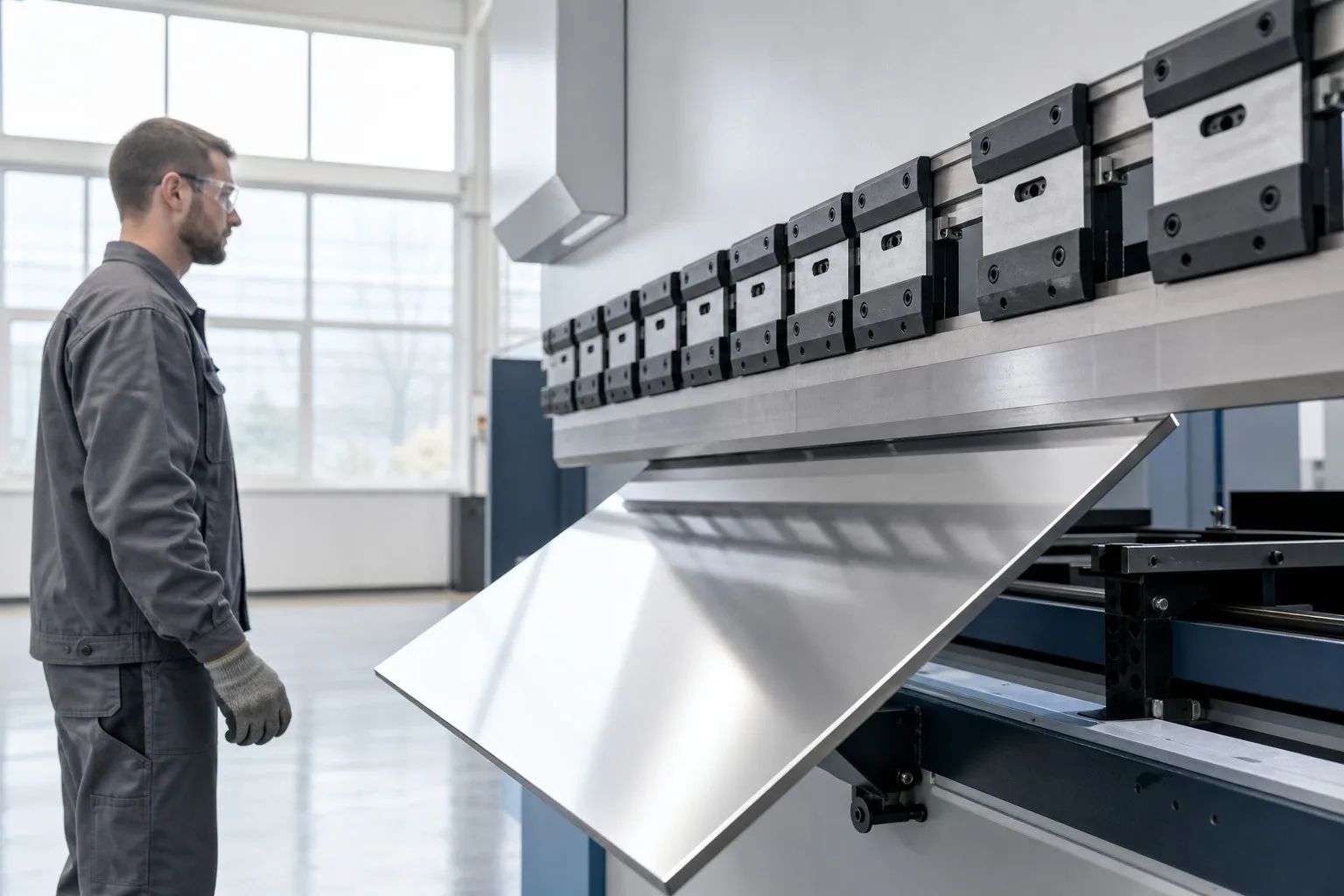
Why stainless steel bends get scratched and marked
When a press brake forms a bend, the sheet is forced to slide over the shoulders of the bottom die under several tons of pressure. That sliding friction is the number one cause of the fine scratch lines you see along the bend radius and the flat flank of the part. In practice, marks come from a combination of factors:
- Friction over stationary die shoulders — the classic cause; the sheet drags across hard, fixed edges.
- Sharp, worn, or damaged die edges — a nicked or burred tool edge acts like a cutting tool on the surface.
- Contamination on the tooling — scale, metal chips, and old lubricant get pressed into the surface under load.
- An incorrect V-opening — too narrow for the material thickness creates deep pressure marks; too wide causes springback and instability.
- Thin material — sheets from 0.5 mm to about 2 mm burnish easily and show every contact point.
Stainless steel, pre-painted sheets, and aluminum are the materials that suffer most, because their visible surfaces are part of the final product — in food equipment, architecture, and consumer goods, a single scratch means a rejected part.
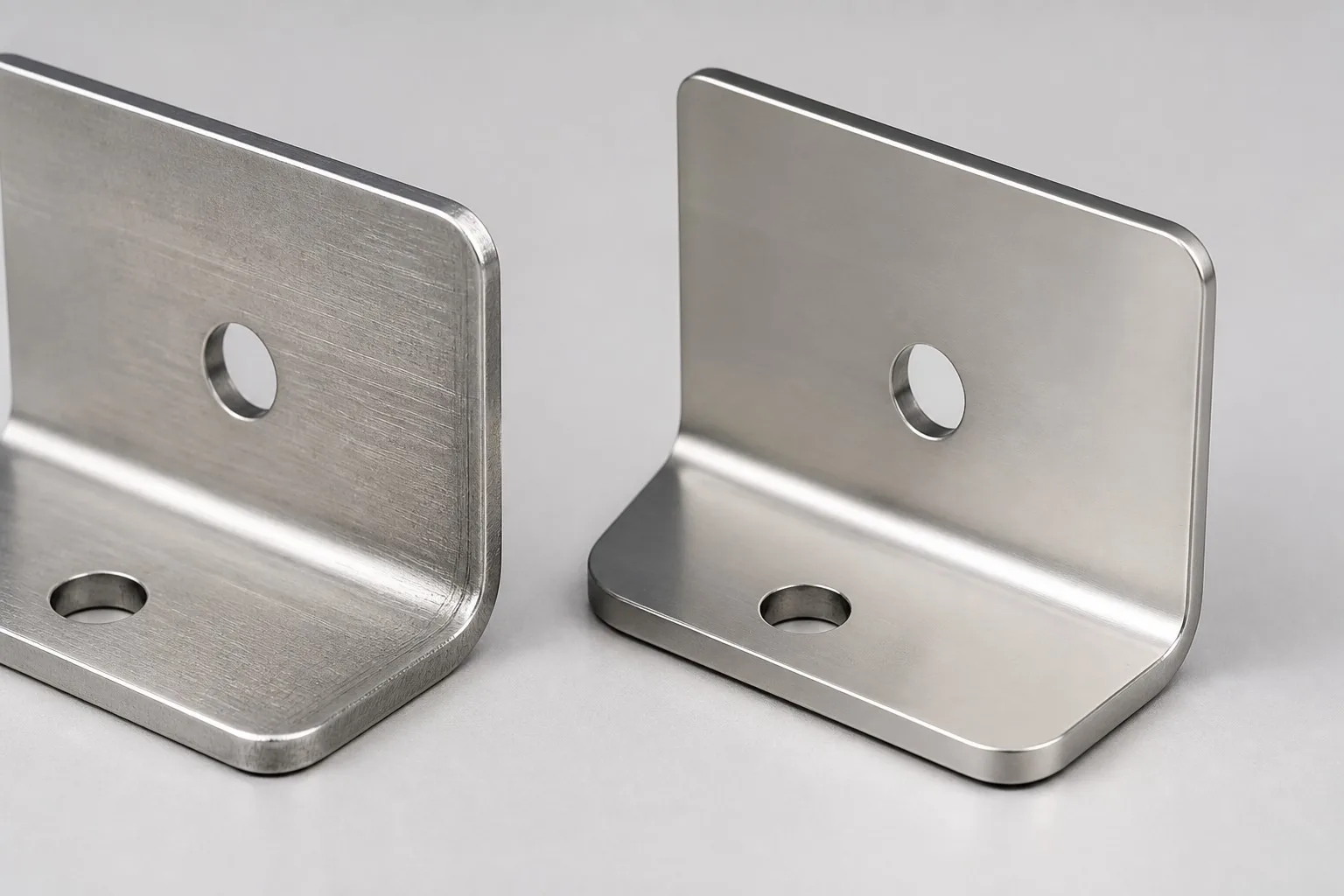
5 proven ways to prevent bending marks
1. Use mark-free (rolling) bending dies
Mark-free tooling eliminates sliding friction by supporting the sheet with a rolling or elastic element. The Roka-V style mark-free die — such as the Markfree bending die from Tranyond — uses a flip-strip design: the strip rolls with the sheet as the bend forms, so the part never drags across a stationary edge. The result is a clean bend with no indentations, scratches, or tool marks, even on cosmetic stainless parts.
The 500 mm Roka-V die is built on a hardened 42CrMo body with an H13 flip strip, and the four models cover sheet thicknesses from 0.5 mm up to 6.0 mm: Roka-V001 (0.5–2.0 mm), Roka-V002 (0–3.5 mm), Roka-V003 (3.5–5.0 mm), and Roka-V004 (4.0–6.0 mm).
2. Apply protective film to the blank or the die
A thin polyurethane or polyethylene film creates a physical barrier between the metal and the tooling. Film is the fastest solution for short runs, prototypes, and mixed-thickness jobs where dedicated dies are not economical. Tranyond stocks an orange protective film (0.5 × 100 mm, 30 m rolls) purpose-made for bending marks, plus a seamless mark-free film range in thicknesses from 0.3 mm to 1.0 mm and widths of 110 mm and 150 mm.
3. Hold the film in place with die clamps
Film only works if it stays exactly where the bend will happen. Mark-free film clamps — a set of two anodized-aluminum supports (model SOPORTE-P/112) — fix the film to the die on presses with dies up to 112 mm wide, so the film cannot wrinkle or slip between parts.
4. Match the V-opening and radius to the material
As a rule of thumb, choose a V-opening roughly 6–8 times the sheet thickness, and use the largest inside radius the part allows. A wider V-opening reduces the pressure per square millimetre on the die shoulders, which directly reduces burnishing and pressure marks. Correct the tooling geometry before you reach for lubricants or slower speeds.
5. Keep dies clean, polished, and damage-free
Contamination is one of the most underrated causes of surface marks. Wipe die shoulders between jobs, stone off nicks and burrs, and never use a damaged tool for cosmetic work. For deep or repeated runs, a dedicated mark-free bending lower die keeps the part off the sharp shoulder edges entirely.
Mark-free die, film, or lower die — how to choose
| Solution | How it works | Best for | Store price (USD) |
|---|---|---|---|
| Roka-V mark-free bending die (500 mm) | Rolling flip strip removes sliding friction | Cosmetic stainless / aluminum, 0.5–6.0 mm series runs | $680–$1,080 per model |
| Mark-free bending lower die | Keeps the sheet off sharp die shoulders | Parts where shoulder contact marks the visible side | $300 |
| Protective bending film / seamless mark-free film | Physical barrier between sheet and die | Short runs, prototypes, mixed thicknesses | From $199 per 30 m roll |
| Film clamps (set of two) | Hold the film tight on dies up to 112 mm wide | Any film-based setup | $200 |
What a mark-free setup looks like on the shop floor
- Choose the tooling. For long cosmetic runs, mount a Roka-V mark-free die; for short runs, fit protective film instead.
- Prepare the tooling. Clean the die shoulders, then fix the film with clamps or seat the mark-free die in the holder.
- Set the V-opening. Aim for roughly 6–8× material thickness and the largest acceptable radius.
- Test on an offcut. Bend a scrap piece first and inspect the radius and flank under good light.
- Check between parts. Re-tension the film and wipe the die after every few parts.
Tranyond is a press-brake tooling specialist: you can source the mark-free die, lower dies, bending films, and film clamps in one order, with die lengths and thickness ranges matched to your machines.
FAQ — scratch-free press brake bending
What causes scratches on press brake bends?
Sliding friction between the sheet and the bottom die shoulders under high clamping force. Sharp or contaminated die edges and an incorrect V-opening make it worse.
Does a mark-free die really prevent scratches?
Yes. Mark-free dies replace sliding contact with a rolling flip strip, so the sheet is never dragged across a stationary edge. Roka-V style dies produce bends with no indentations, scratches, or tool marks on the tested thickness range.
What thickness range do mark-free dies cover?
The 500 mm Roka-V series covers 0.5–6.0 mm across four models: Roka-V001 (0.5–2.0 mm), V002 (0–3.5 mm), V003 (3.5–5.0 mm), and V004 (4.0–6.0 mm).
Can protective film stop bending marks on stainless steel?
Yes, film is a fast and cheap barrier for short runs and prototypes. Use 0.3–1.0 mm seamless film or the 0.5 mm orange film, and hold it in place with film clamps so it cannot slip during the bend.
Can I just change the V-opening instead of buying new tooling?
Partly. Matching the V-opening (roughly 6–8× thickness) reduces pressure marks, but it cannot remove the sliding friction that causes scratches. For cosmetic parts, combine correct geometry with mark-free tooling or film.
Do I need special tooling for pre-painted or coated sheets?
Yes. Coated and pre-painted sheets scratch even more easily than bare stainless. Use film or mark-free tooling from the first part, and never bend them on nicked or contaminated dies.
Sources
- Wila Tooling — Mark-free bending: three ways to minimize part marking
- Mate Precision Technologies — A great way to eliminate die marks and scratches (March 27, 2019)
- CNGOLIN — Mark-free press brake tools: the ideal solution for sheet metal processing (August 7, 2025)
- LMRM Tool — Mark-free press brake dies: protecting sensitive surfaces (January 21, 2026)
For the practical decision on which path: film vs mark-free die, see Mark-Free Bending: Roller Die vs Protective Film — Which to Use?; keep this guide as the full scratch-prevention playbook.