
Press brake automation is the defining trend of 2026 — and the data backs it up. The global press brake market is projected to grow from USD 3.4 billion in 2025 to USD 5.6 billion by 2032 (7.4% CAGR), the metal fabrication equipment market is expected to reach USD 67.0 billion this year, and 70.87% of U.S. metal fabricators plan to evaluate press brakes in 2026. This article breaks down the latest market numbers, the survey data, and what automation actually changes on the shop floor.
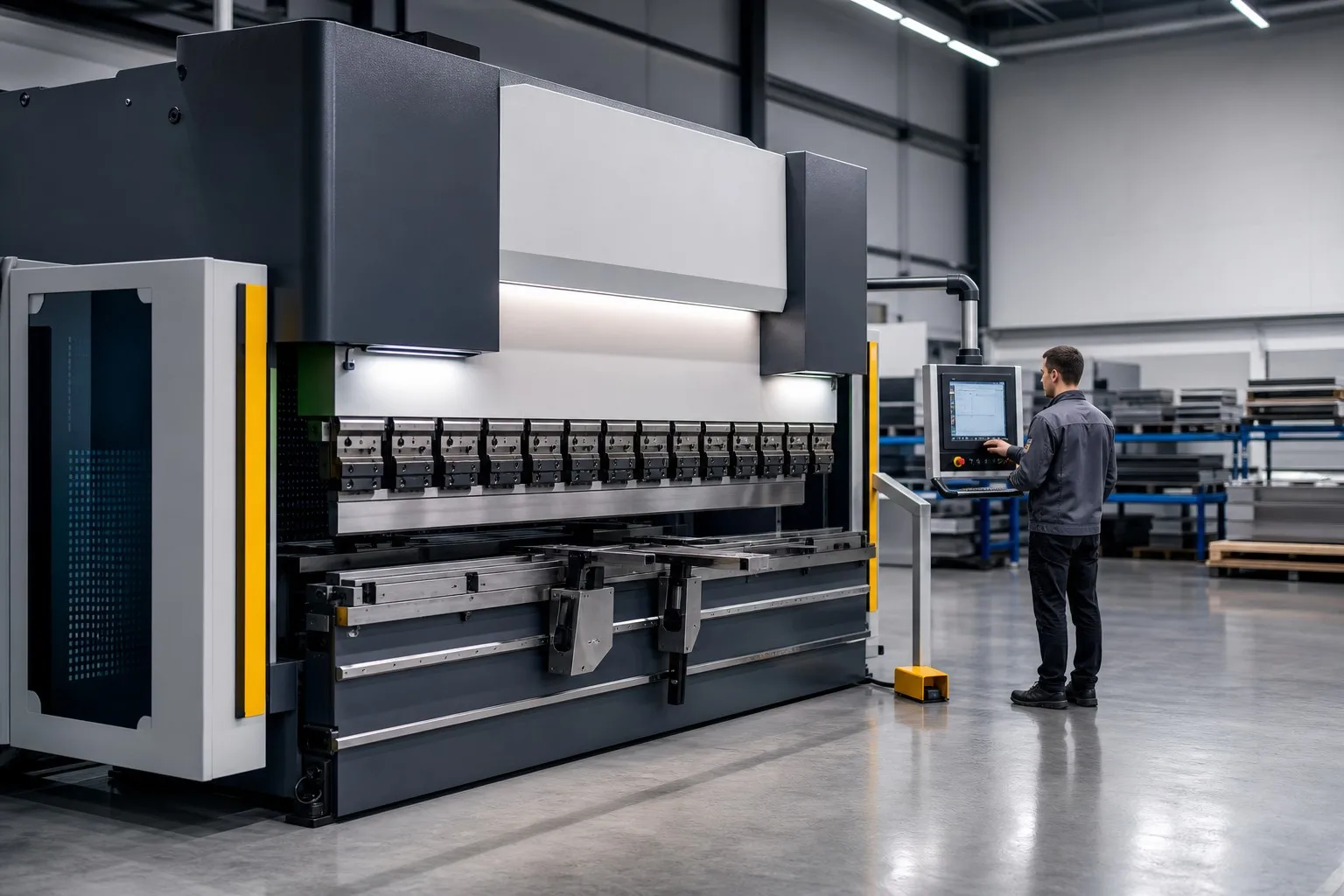
Press Brake Market at a Glance: The 2026 Numbers
Four data points define the 2026 bending landscape:
| Metric | 2026 value | Projection | Source |
|---|---|---|---|
| Global press brake market | USD 3.4B (2025) | USD 5.6B by 2032, 7.4% CAGR | 6Wresearch (2026) |
| Metal fabrication equipment market | USD 67.0B | USD 91.4B by 2031 | Persistence Market Research (Jul 22, 2026) |
| Automatic bending machine market | USD 4.47B | Hydraulic segment CAGR 3.8% (2026–2035) | Precedence Research (Mar 20, 2026) |
| Fabricators planning press brake investment | 70.87% | — | The Fabricator survey (Jan 28, 2026) |
Fabricators Are Spending: What the 2026 Survey Shows
The Fabricator's shop survey, published January 28, 2026, found that 70.87% of metal fabricators plan to look at press brakes in 2026, while 65.96% are interested in gas metal arc welding equipment. The headline takeaway: fabricators expect 2026 to feel like 2025 — steady demand driven by replacement cycles and modest capacity expansion rather than a boom. That makes the buying decision increasingly about productivity per dollar: faster setup, fewer rejected parts, and repeatable accuracy.
Automation and AI Are Reshaping the Press Brake
Two forces are driving the 2026 upgrade wave:
- Industrial automation is the market's main growth engine. Persistence Market Research (July 22, 2026) names automation and robotics as the primary driver of the metal fabrication equipment market, valued at USD 67.0 billion in 2026.
- Smart features are becoming standard purchase criteria. Industry analysis published July 7, 2026 (SMACITC, "2026 CNC Press Brake Innovations and Trends") shows fabricators now expect AI-assisted bend-angle correction, programmable backgauges, and networked controls that reduce human error and cut setup time.
What This Means for Your Shop Floor
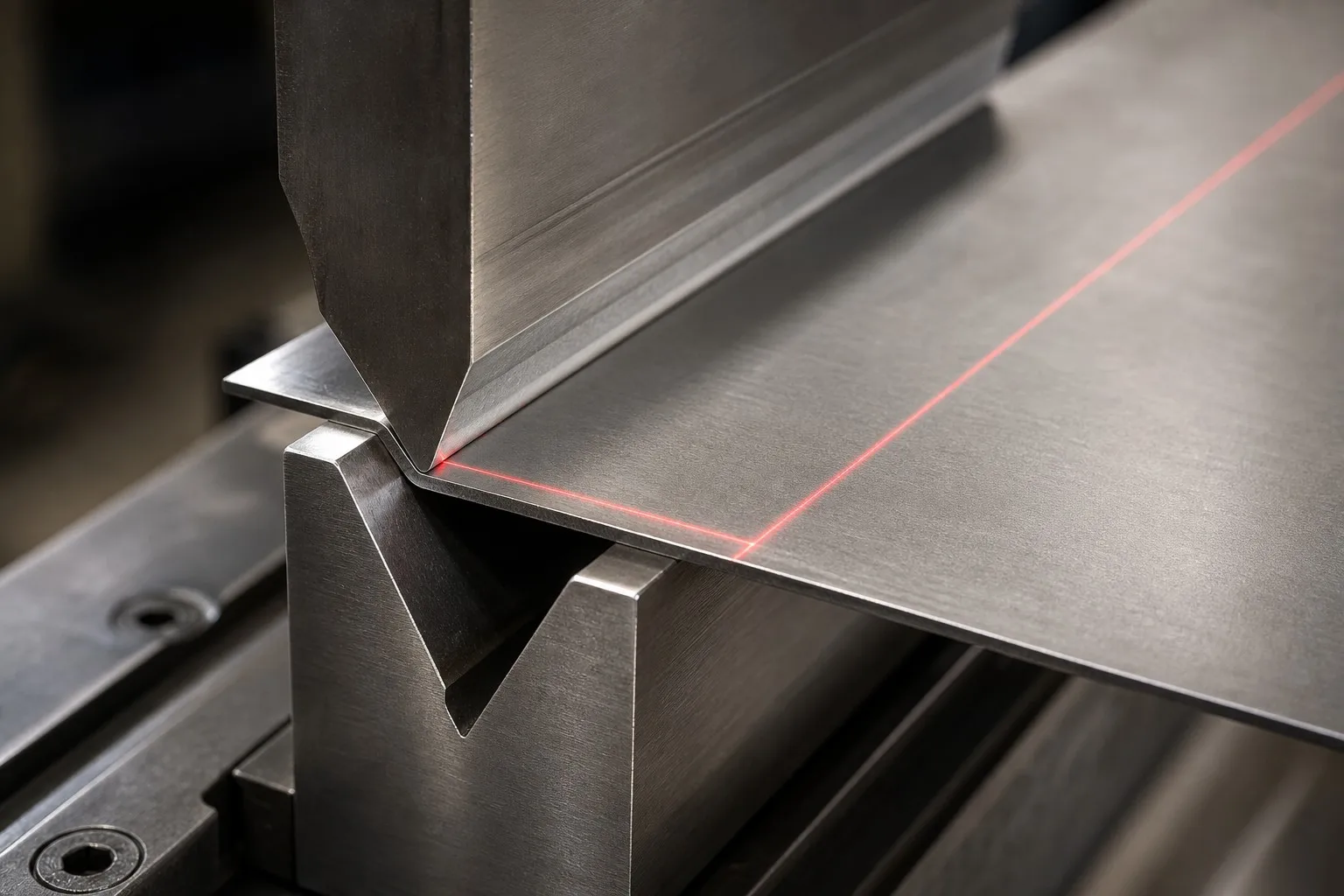
As machines get smarter, setup speed and tooling quality become the bottleneck — the human part of the bend that automation cannot fix. Three practical priorities:
- Tooling precision. Automated bending tolerances amplify any inconsistency in the V-die. A worn or mismatched die becomes rejected parts at higher throughput.
- Setup accessories. Laser alignment devices and magnetic squaring arms cut the minutes spent squaring sheets and setting zero — the fastest way to capture automation-level repeatability without a new machine.
- Mark-free bending. Protective films and mark-free dies eliminate scratches and rework on coated or pre-painted sheet, which matters more as lines run faster with less inspection.
Suppliers like Tranyond (tranyond.shop) focus exactly on this part of the equation: press brake tooling, laser alignment devices, magnetic squaring arms, and mark-free bending solutions that let smaller shops capture the same setup-time savings as fully automated lines.
Frequently Asked Questions
1. Is the press brake market growing in 2026?
Yes. Analysts project growth from USD 3.4 billion in 2025 to USD 5.6 billion by 2032, a compound annual growth rate of 7.4% (6Wresearch, 2026).
2. How many fabricators plan to invest in press brakes this year?
70.87% of metal fabricators surveyed by The Fabricator (January 28, 2026) plan to look at press brakes in 2026 — the single most-mentioned equipment category.
3. What automation features matter most on a 2026 press brake?
AI-assisted bend-angle correction, programmable backgauges, networked controls, and real-time process data are the features fabricators now weigh most heavily (SMACITC, July 7, 2026).
4. Does automation make press brake tooling less important?
No — the opposite. Automated lines run tighter tolerances, so die quality and setup accuracy have an outsized effect on scrap rates.
5. What is mark-free bending?
Mark-free bending uses protective films or specialized dies so the punch and die leave no scratches on coated or pre-painted sheet metal — eliminating rework and finishing steps in automated workflows.
6. How can a small shop benefit from the 2026 automation trend?
Setup accessories such as laser alignment devices and magnetic squaring arms (available from suppliers like Tranyond) deliver automation-level repeatability and setup speed without the cost of a new machine.
7. What is driving the metal fabrication equipment market in 2026?
Industrial automation and robotics are the primary growth drivers, per Persistence Market Research (July 22, 2026), which values the market at USD 67.0 billion for 2026.
Sources
- The Fabricator — "Metal fabricators expect 2026 to be like 2025" (January 28, 2026)
- PR Newswire / Persistence Market Research — "Industrial Automation Powers the Future of the Metal Fabrication Equipment Market" (July 22, 2026)
- Precedence Research — "Automatic Bending Machine Market Size" (March 20, 2026)
- SMACITC — "2026 CNC Press Brake Innovations and Trends" (July 7, 2026)
- 6Wresearch — "How Big Is the Press Brake Market" (2026)