
If your shop punches holes and cuts steel profiles every day — angle, flat bar, round bar or plate — a combined punching and shearing machine does both jobs on one frame. the CY series offers three capacity tiers: the CY80 (USD 2,000), the CY100 (USD 3,000) and the CY120 (USD 4,000), all running at 30 strokes per minute on 380 V three-phase power. Pick by budget and workload: the CY80’s 360 kN (37-ton) punch covers light fabrication and construction work, while the CY120’s 4 kW motor and 1,000 kg frame handle continuous production. This article compares the three models using real specs and prices from the store listings, then explains which machine fits which shop.
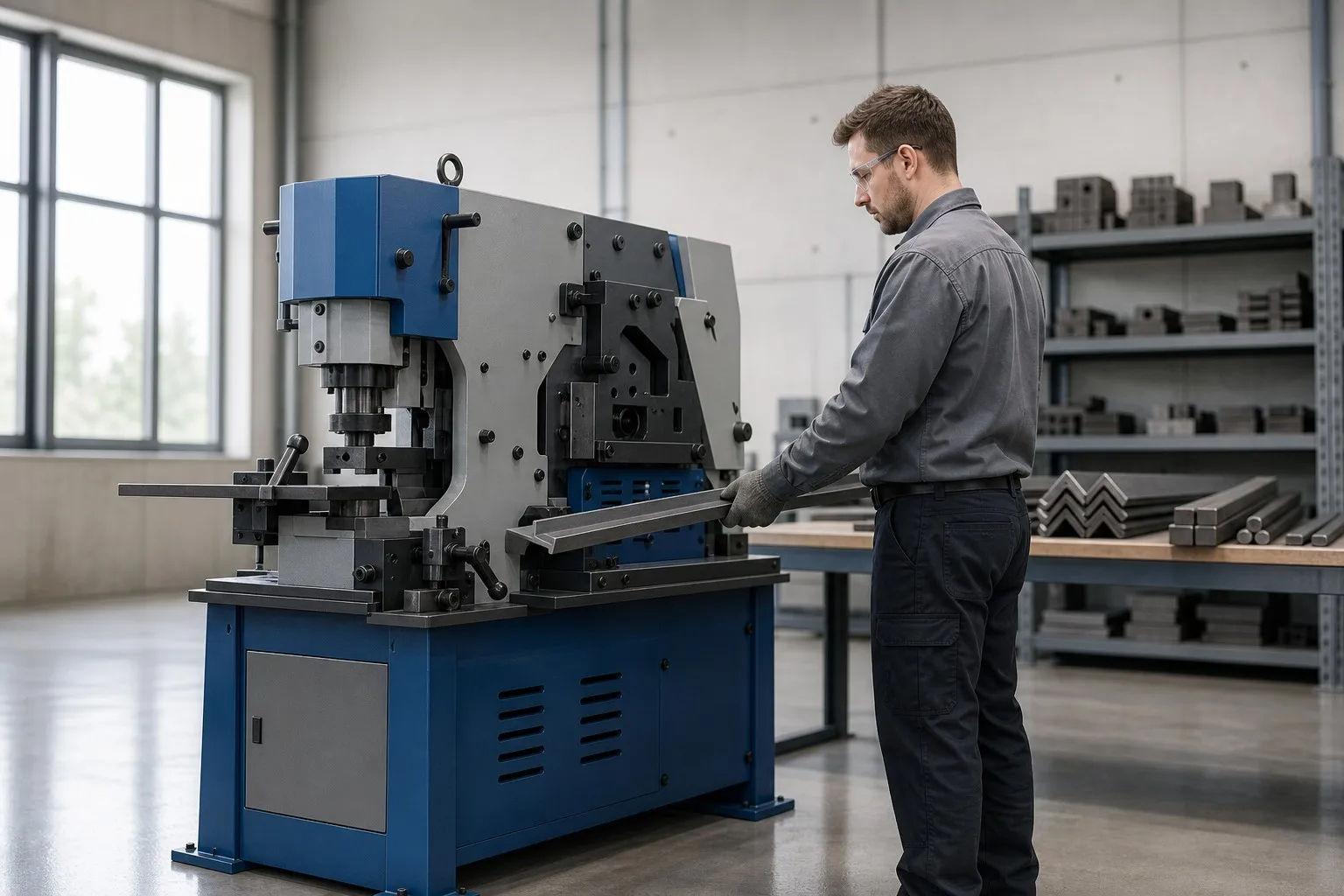
What Is a Combined Punching and Shearing Machine?
A punching and shearing machine is multi-station equipment that punches holes and shears metal plate, bar, and structural profiles in a single setup — the machine North American fabricators call an ironworker (Piranha Fab, August 5, 2026). Instead of moving a part from a punch press to a separate shear, one machine and one operator handle both operations at adjacent stations:
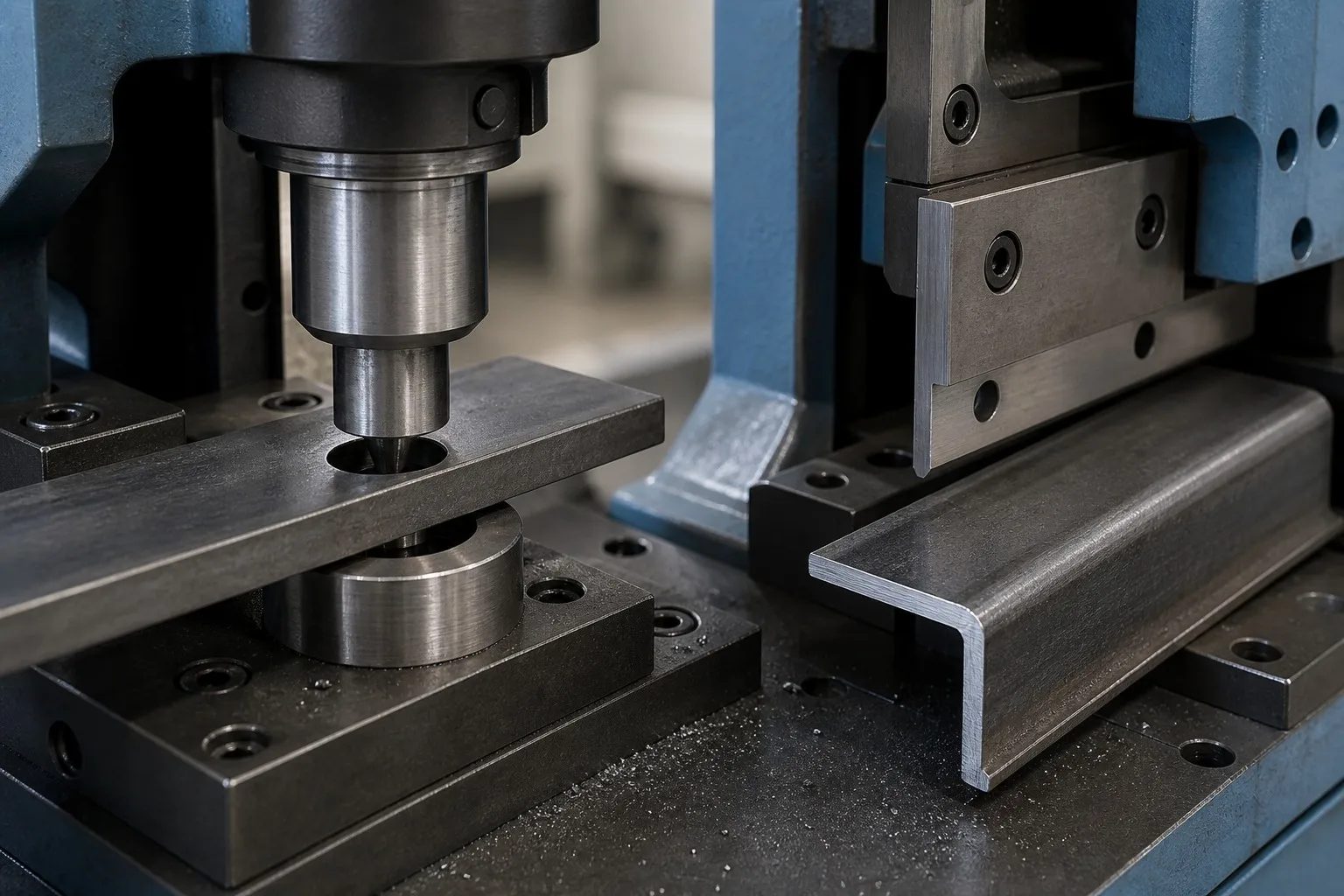
- Punching drives a punch through a die to create a clean hole and eject a slug.
- Shearing cuts bar, angle, and plate to length between a moving and a fixed blade.
That consolidation is the whole point: fewer machines, less floor space, less material handling between operations, and faster changeovers between jobs.
The CY Series at a Glance: Real Specs and Prices
The figures below are taken directly from the Tranyond product listings (tranyond.shop) — no estimates.
| Specification | CY80 | CY100 | CY120 |
|---|---|---|---|
| Price (USD) | $2,000 | $3,000 | $4,000 |
| Max. punching force | 360 kN (37 ton) | Not specified | Not specified |
| Cutting frequency | 30 strokes/min | 30 strokes/min | 30 strokes/min |
| Motor | 2.2 kW, 380 V, 50 Hz | 3 kW, 380 V | 4 kW, 380 V |
| Dimensions (L x W x H) | 900 x 500 x 1100 mm | 1200 x 500 x 950 mm | 1100 x 600 x 1450 mm |
| Weight | Not specified | 800 kg | 1,000 kg |
All three models run on 380 V three-phase power, so confirm your shop’s supply before ordering — the CY80 is also rated for 50 Hz.
What Materials and Jobs Can the CY Series Handle?
The CY series is designed for low-carbon cold steel with tensile strength below 450 MPa, plus the everyday structural profiles that fabrication shops handle most:
- CY80 — punches angle steel, flat iron and C channel iron; shears round bar, square bar, angle steel, flat iron and C channel iron; and handles die cutting. It is aimed at machinery manufacturing, construction and hydro-power projects, with a copper-wire motor, reinforced frame and compact structure.
- CY100 and CY120 — punch low-carbon cold steel (<450 MPa tensile), angle steel, square steel, flat steel and steel plate, and can profile-process materials with similar shapes, including non-ferrous metals such as copper. They suit machinery, electric power, construction and light industry.
In short: punching makes the holes (mounting holes in angle brackets, gussets, base plates), shearing trims the profiles to length — the two operations most structural and general fabrication jobs need every day.
CY80 vs CY100 vs CY120: How to Choose Your Model
Choose the CY80 if you run light, occasional work
At USD 2,000 with a 2.2 kW motor, the CY80 is the entry point. Its 360 kN (37-ton) punching force and 900 x 500 x 1100 mm footprint suit small job shops, maintenance bays, and construction or hydro-power sites that punch and shear profiles intermittently. As a rule of thumb from The Fabricator, punching tonnage should be matched to your largest hole and thickest material — so if most of your work is thin angle and flat bar, a 37-ton punch is ample.
Choose the CY100 for everyday shop production
At USD 3,000, the CY100 steps up to a 3 kW motor and an 800 kg frame with a longer 1200 mm table. It is the natural choice for machinery, electric power, light-industry and general fabrication shops running mixed angle, square and flat steel jobs through the day.
Choose the CY120 for heavy or continuous workloads
At USD 4,000, the CY120 tops the range with a 4 kW motor, 1,000 kg frame and the tallest 1450 mm working height — built for shops that process larger profiles or run punching and shearing for longer shifts and want the headroom of the biggest machine in the series.
Need help matching a model to your jobs? Tranyond’s team works with press-brake tooling and sheet-metal equipment daily and can advise on the right CY model, dies and tooling for your material mix.
What Else to Check Before You Buy
Independent buying guides (Surplus Record’s ironworker guide, Piranha Fab) converge on the same checklist, and it applies to the CY series too:
- Match force to material. Compare your largest hole size and thickest profile against the machine’s rated punching force.
- Plan your tooling. Punch and die sizes determine the hole diameters you can make — order the dies for the jobs you actually run.
- Check clearance and cut quality. Blade and punch-to-die clearance directly affects how clean the cut edge is.
- Measure your floor space. The three models have very different footprints (from 900 x 500 x 1100 mm to 1100 x 600 x 1450 mm).
- Confirm power supply. All CY models need 380 V three-phase; the CY80 is rated 50 Hz.
- Ask about support. Tooling availability and after-sales parts matter as much as the machine price over a decade of use.
Safety First: Operating Rules That Never Change
A combined punching and shearing machine concentrates several cutting stations on one frame, which means multiple pinch points around the dies and blades. Whatever model you buy, follow these universal rules (OSHA power-press guidance and ANSI B11.5):
- Wear safety glasses, hearing protection and steel-toed boots; keep gloves away from the punching and shearing stations.
- An emergency stop is a reactive control — never a substitute for point-of-operation guarding and safe setup.
- Keep hands clear of the die and blade area, never stack material for a single punch stroke, and follow lockout/tagout before maintenance or die changes.
- Always read and follow the machine manual supplied by the manufacturer.
Frequently Asked Questions
1. What is a combined punching and shearing machine?
It is a multi-station machine that punches holes and shears metal plate, bar and structural profiles in a single setup, instead of using separate punch presses and shears (Piranha Fab, 2026).
2. Is a punching and shearing machine the same as an ironworker?
Yes. “Ironworker” is the common North American name for this exact type of combined punching and shearing equipment.
3. What materials can the Tranyond CY series process?
Low-carbon cold steel with tensile strength below 450 MPa — angle steel, square steel, flat steel, steel plate, round bar and C channel iron — plus similar-shaped non-ferrous metals such as copper (per the CY100 and CY120 listings).
4. How much punching force does the CY80 have?
The CY80 is rated at 360 kN, or about 37 tons — enough for conventional angle and flat-bar punching in light and medium fabrication.
5. How much do the CY80, CY100 and CY120 cost?
Tranyond lists them at USD 2,000, USD 3,000 and USD 4,000 respectively on tranyond.shop.
6. How fast do the CY machines run?
All three models run at 30 strokes per minute on 380 V three-phase power.
7. Which CY model should a small shop choose?
Start with the CY80 (USD 2,000): it delivers a 37-ton punch and shear capability in the smallest footprint. Move up to the CY100 or CY120 as workload, profile size and shift hours grow.